
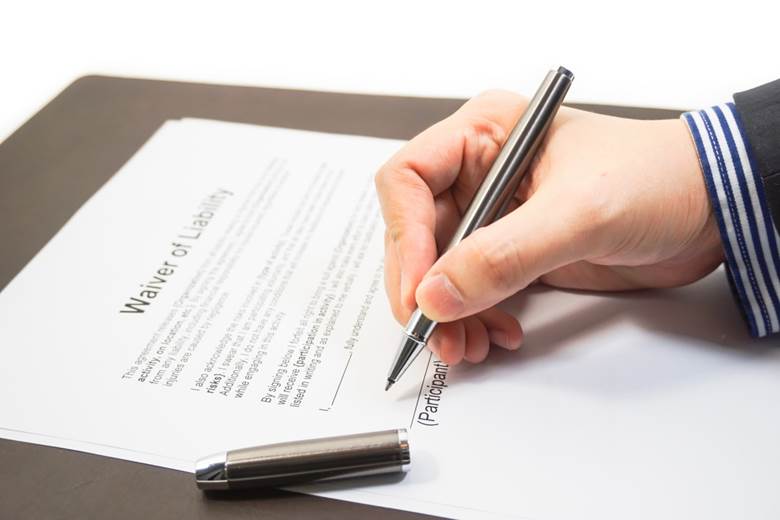
You’ve done your homework. As you know, your attraction park is fundamentally safe, so you can go ahead and let your customers, friends, or clients get rowdy without too much concern.
But wait. You just remembered anything’s possible. If someone gets hurt accidentally, they could sue you for damages.
So how can you stop that from happening? Enter a liability waiver.
What is a liability waiver, and when is it enforceable? We have the answer.
What Is a Liability Waiver and Why Do You Need One?
A liability waiver is a contract between you and a business that states that you will not hold the business liable for any injuries you may sustain while participating in an activity organized by the business. In most cases, a liability waiver will state that the company or individual is not responsible for any injuries or damages resulting from their actions.
These waivers are commonly used by businesses that offer activities that involve a degree of risk, such as skydiving or rock climbing. However, it is essential to make sure that the waiver is appropriately written and signed to ensure that it will be enforceable in court.
When Is a Liability Waiver Enforceable?
For a liability waiver to be enforceable, it must be in writing, signed by both parties, and clearly state the rights being waived.
There are some situations where a waiver will not be enforceable, even if it is valid.
If the waiver is for something that is against public policy, such as waiving the right to sue for wrongful death, the waiver will not be enforceable. If the waiver is for a specific activity, such as skydiving, and the person signing the waiver is not made aware of this, the waiver will be invalidated.
A waiver can also be invalid if it is signed under duress. For example, if someone is forced to sign a waiver to participate in an activity, the release is invalid.
If you got any questions, contact personal injury defense lawyers as they know more about this topic.
How to Draft a Liability Waiver
A liability waiver form must tell the risks that the activity poses. It must also have a caution at the very top that states that the participants must read the waiver in its entirety. And of course, it must have a release clause that states that your company would not be held responsible in the case of harm.
You can click here for a more detailed guide on what is inside a liability waiver.
Understand the Liability Waiver Basics
Now that you know what is a liability waiver and what is written in it, we hope that you will be able to use this information for your benefit. Keep in mind the times when it is enforceable so you wouldn’t be caught off guard.
Did this article help you? Keep reading our blog for other relevant topics.